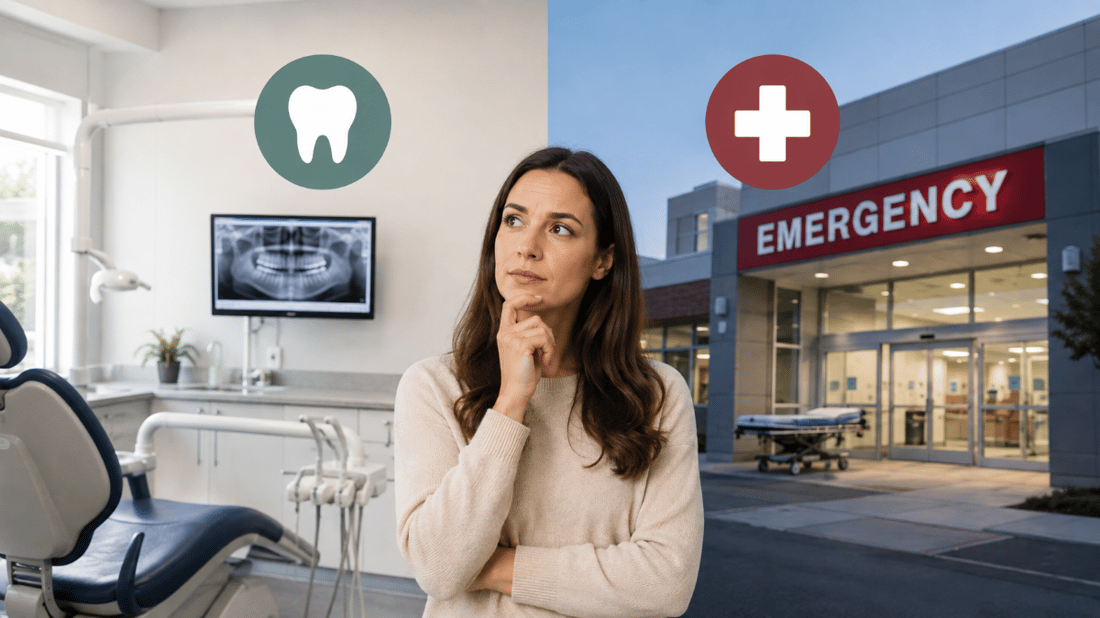
For most tooth pain, damaged teeth, painful lost restorations and localized dental infections, call a dentist for urgent assessment. Go to a hospital emergency room or call 911 when the problem includes signs of a medical emergency, such as breathing difficulty, loss of consciousness, severe uncontrolled bleeding, a major facial or jaw injury, or rapidly worsening swelling that may threaten the airway. A hospital can address medical danger, but definitive dental treatment may still require a dentist.
Choose the Right Door Without Losing Time
- A dentist is usually the first call for a dental problem. Dentists can assess the tooth, explain the cause and provide dental treatment or referral.
- A hospital is appropriate for medical danger. Breathing difficulty, loss of consciousness, major trauma or uncontrolled bleeding requires emergency medical care.
- Swelling needs context. Localized dental swelling requires urgent dental assessment; rapidly spreading swelling or swallowing and breathing difficulty may require 911 or the ER.
- Hospitals and dentists have different roles. The ER may stabilize serious medical risks, while a dentist may still be needed for definitive tooth treatment.
- Call instead of guessing. The clinic can provide temporary guidance and help determine the next dental step when the situation is not a medical emergency.
When dental pain becomes intense, people often search can you go to emergency for dental pain because they are unsure whether a hospital or dental office is the right destination. The answer depends less on the pain score alone and more on whether the condition is primarily dental or has become a broader medical emergency.
The Royal College of Dental Surgeons of Ontario distinguishes a dental emergency from a medical emergency and notes that many dental emergencies can be managed in a dental setting. Welland Dental Centre provides urgent assessment for severe pain or swelling, dental infections or abscesses, broken or knocked-out teeth, painful lost fillings or crowns, and oral trauma. Patients can start by contacting the Emergency Dentist in Welland unless the symptoms point to an immediate threat to breathing, consciousness, bleeding control or major facial structures.
Dental Emergency or Medical Emergency: What Is the Difference?
A dental emergency is an urgent oral problem that may cause severe suffering or risk serious harm or permanent damage if treatment is delayed. A medical emergency involves immediate danger to general health, breathing, circulation, consciousness or major injury. The categories can overlap. A dental infection, for example, may begin as a tooth problem but become a medical concern if swelling spreads and affects breathing or swallowing.
The safest decision is based on the most serious symptom present. Tooth pain without medical danger generally needs a dentist. Breathing difficulty or major trauma needs emergency medical services, even when the source began in the mouth.
Dentist vs Hospital ER: A Practical Decision Guide
| Situation | Usually contact first | Why |
|---|---|---|
| Severe tooth pain without breathing difficulty, loss of consciousness or major injury | Emergency dentist | A dentist can assess the tooth and provide dental treatment, relief, stabilization or referral. |
| Localized swelling, suspected abscess or dental infection | Emergency dentist urgently | The dental source needs assessment and infection control. Escalate to medical emergency care if swelling spreads rapidly or affects breathing or swallowing. |
| Broken, cracked or knocked-out tooth without major facial injury | Emergency dentist immediately | These are time-sensitive dental injuries. Major facial trauma, suspected jaw fracture or uncontrolled bleeding also requires hospital assessment. |
| Painful lost filling or crown | Emergency dentist | The tooth may need protection, restoration or another treatment after assessment. |
| Difficulty breathing, loss of consciousness or severe confusion | Call 911 / hospital ER | These are medical emergency signs, regardless of whether the problem started with a tooth. |
| Severe uncontrolled bleeding or major facial or jaw injury | Call 911 / hospital ER | Emergency medical assessment may be required for bleeding control, trauma and airway safety. |
Do not use the table to self-diagnose
Symptoms can change quickly. When there is any concern about breathing, consciousness, uncontrolled bleeding or major trauma, use emergency medical services. For urgent dental symptoms without those medical danger signs, call the dental clinic and describe the situation.
When Should You Call an Emergency Dentist?
Call a dentist promptly when the main concern is severe tooth pain, dental swelling, a suspected abscess, a broken or cracked tooth, a knocked-out tooth, a painful lost filling or crown, or another oral injury that needs dental assessment. These concerns may worsen or cause permanent damage if care is delayed, but they often require equipment and procedures found in a dental setting.
Welland Dental Centre begins with urgent symptom assessment. The team provides temporary guidance, discusses the next step and offers same-day appointments when possible. At the visit, the dentist may prioritize pain relief, infection control, restoration, stabilization, extraction when necessary, referral or follow-up.
Why a dentist can be the more direct route
A hospital emergency department is designed for severe illness and life-threatening injury. It may not have the dental equipment or provider needed to repair a tooth, replace a restoration, complete root canal treatment or make a final dental treatment decision. Services vary by hospital. Even when the ER helps stabilize pain, bleeding, infection or trauma, the patient may still need a dentist afterward.
When Should You Call 911 or Go to the Hospital ER?
Ontario advises using emergency rooms for serious illness and life-threatening injury and calling 911 for symptoms such as breathing difficulty or loss of consciousness. The Canadian Dental Association also directs patients to hospital emergency care when oral bleeding does not stop and when a broken jaw may be present.
- Breathing difficulty or signs that the airway may be compromised.
- Loss of consciousness, severe confusion or inability to stay alert.
- Severe bleeding that cannot be controlled with pressure.
- Major facial or jaw trauma, including a possible fracture.
- Rapidly worsening swelling involving the mouth, tongue, throat, face or neck, especially with trouble swallowing or breathing.
This is general medical safety guidance, not a diagnosis. When the symptoms appear life-threatening, do not wait for a dental office to open and do not rely on a website article. Call 911 or go to the nearest emergency department.
Can a Hospital Do Emergency Dental Work?
The question can a hospital do emergency dental work does not have one universal answer because hospital resources differ. An emergency department can assess and stabilize serious medical problems related to infection, trauma, bleeding or the airway. It may provide medical treatment that is necessary for safety. However, the hospital may not provide the definitive dental procedure needed to repair or treat the tooth.
A useful way to think about the roles is: the hospital manages immediate medical danger; the dentist manages the dental source and long-term tooth treatment. Sometimes only one is needed. In complex cases, both may be involved.
How Do Swelling, Bleeding and Trauma Change the Decision?
Swelling and suspected infection
A dental abscess can cause tooth pain, gum swelling, facial swelling, fever or a bad taste. Localized swelling still needs urgent dental assessment because the source may require infection control and dental treatment. If swelling is expanding quickly, affects the throat or tongue, or makes it difficult to breathe or swallow, treat it as a medical emergency.
Bleeding
Bleeding after a minor oral injury may slow with steady pressure. Bleeding that remains severe or uncontrolled requires hospital emergency care. A dentist may also need to assess damaged teeth or soft tissue after the medical risk is controlled.
Facial and jaw trauma
A damaged tooth can often be assessed by a dentist. A major collision, fall or blow involving the face or jaw can create injuries beyond the teeth, including possible fractures. In that situation, hospital assessment may be required even when dental treatment will also be needed.
What Should You Do After Hours?
When the symptoms are dental but not life-threatening, call the dental office and follow the available instructions. Explain the concern clearly and note any change in pain, swelling, bleeding or injury. When the clinic is able to assess the call, the team can explain the next dental step and whether an urgent appointment may be possible.
When there is a medical emergency, call 911 or go to the hospital. Do not delay because the original source appears dental. The correct destination is the one equipped to address the most serious immediate risk.
After the Immediate Danger Is Controlled
A hospital visit may not end the dental problem. Arrange dental follow-up if a tooth, restoration, infection or injury still requires treatment. Bring any discharge information that may help the dentist understand what was assessed or provided. The Emergency Dentist in Welland page explains how Welland Dental Centre handles urgent assessment, relief, stabilization and follow-up when the condition is appropriate for dental care.
Frequently Asked Questions
Yes, but the hospital ER is most appropriate when dental pain is accompanied by a medical emergency such as breathing difficulty, loss of consciousness, severe uncontrolled bleeding or major facial trauma. Most tooth pain without those danger signs should be assessed by a dentist.
Hospital services vary. An ER can assess and stabilize serious medical risks related to infection, trauma, bleeding or the airway, but definitive tooth treatment may still require a dentist.
Contact a dentist urgently for localized dental swelling. Call 911 or go to the ER when swelling is rapidly worsening, involves the tongue or throat, or makes breathing or swallowing difficult.
Contact a dentist immediately because a knocked-out permanent tooth is time-sensitive. If there is major facial trauma, uncontrolled bleeding, loss of consciousness or another medical danger, call 911 or go to the hospital as well.
The dentist can assess the suspected dental infection and determine the appropriate infection control, pain relief and dental treatment. The exact care depends on the clinical findings.
Welland Dental Centre offers same-day appointments when possible. Availability depends on urgency and the clinic schedule, so patients should call and describe the concern.
Choose the Right Care Before the Problem Escalates
For urgent tooth pain, dental swelling, a damaged tooth or a painful lost restoration without medical danger signs, call Welland Dental Centre and describe the concern. Same-day appointments are offered when possible. Visit Emergency Dentist in Welland for the clinic's emergency-care process. For breathing difficulty, loss of consciousness, severe uncontrolled bleeding or major facial injury, call 911 or go to the hospital ER.