
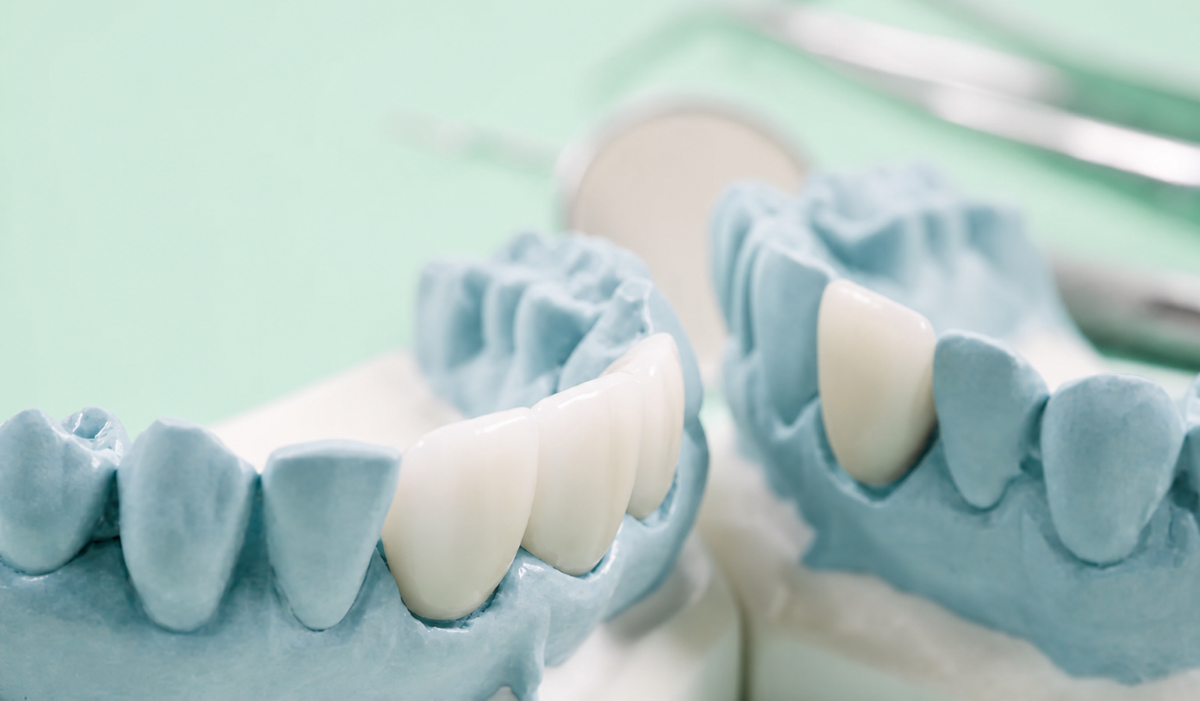
A dental crown covers and protects a damaged or weakened tooth, while a dental bridge replaces one or more missing teeth. Welland Dental Centre offers porcelain or ceramic, zirconia, and porcelain-fused-to-metal crowns, plus traditional, cantilever, and Maryland bridges. The right option depends on the tooth, supporting teeth, bite, bone health, cost, and treatment goals.
Restore What Is Damaged Without Guessing About the Option
- A crown protects a tooth that is damaged, weakened, or has had extensive treatment.
- A bridge replaces one or more missing teeth when the supporting teeth are appropriate.
- Crown materials include porcelain or ceramic, zirconia, and porcelain-fused-to-metal.
- Bridge designs include traditional, cantilever, and Maryland bridges.
- Dental implants may be discussed as an alternative to a bridge when appropriate.
- A typical crown range of $2,186 to $2,250 is provided, with final cost based on the individual case.
Patients searching for dental crowns and bridges in Welland are often trying to answer two different questions: can the natural tooth still be protected, or does a missing tooth need to be replaced?
Those questions lead to different treatment paths. A crown is placed over an existing tooth. A bridge fills a missing-tooth space. The useful starting point is an examination that explains which problem is being treated and why a particular option is being recommended.
What Is a Dental Crown?
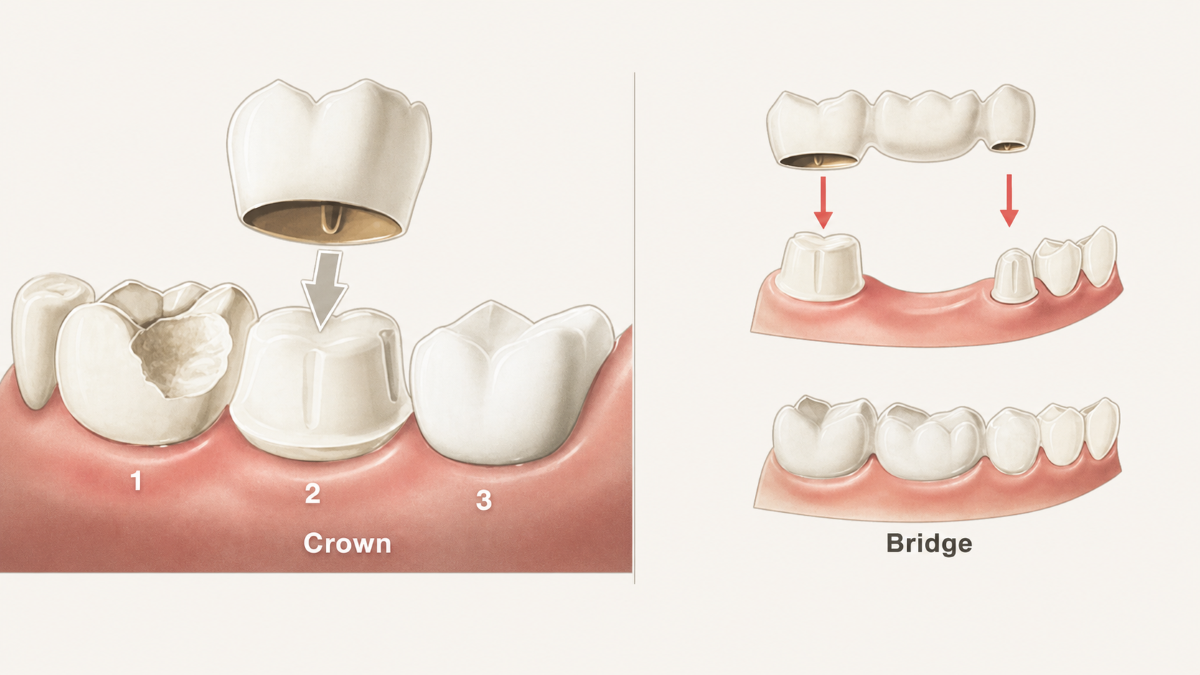
A dental crown is a restoration that covers a damaged or weakened tooth to protect it and help it function. Welland Dental Centre may recommend a crown when a tooth has lost enough structure that a smaller restoration may not provide the same level of protection.
Crowns are often discussed after a large filling or after Root Canal Treatment when the tooth needs additional protection. The recommendation is based on the clinical condition of the tooth rather than on a rule that every filled or root-canal-treated tooth automatically needs a crown.
If the tooth still has a smaller area of decay or minor damage, a Dental Filling may be the more appropriate restorative option. The dentist can explain why a crown is being considered instead of a filling.
When Might a Crown Be Recommended?
A crown may be considered when a tooth is damaged, weakened, has a large filling, or has undergone root canal treatment and needs protection. The exact reason should be clear before you commit to treatment.
- A weakened tooth that needs broader protection
- A tooth with a large existing filling
- A tooth treated with root canal therapy when added protection is recommended
- A tooth where material strength and bite forces need to be considered
- A case where preserving the natural tooth remains the treatment goal
The dentist should also explain whether another option is reasonable. A crown is not simply a cosmetic cover; it is used to restore and protect a tooth based on what the examination shows.
What Crown Materials Are Available?
Welland Dental Centre confirms three crown material categories: porcelain or ceramic crowns, zirconia crowns, and porcelain-fused-to-metal crowns.
Material choice is based on strength, appearance, tooth location, and bite. That means the material selected for a visible front tooth may be discussed differently from a tooth that receives heavier chewing forces.
- Porcelain or ceramic crowns
- Zirconia crowns
- Porcelain-fused-to-metal crowns
The page should not promise that one material is universally the best. Ask what material is being recommended for your tooth and why it suits the location, bite, and treatment goal.
What Is a Dental Bridge?
A dental bridge replaces one or more missing teeth by using a restoration that spans the missing space. At Welland Dental Centre, bridges are discussed when the surrounding conditions can support this type of replacement and the patient is not choosing an implant for that space.
Replacing a missing tooth is not only about filling a visible gap. The dentist considers the supporting teeth, bite, bone health, comfort, cost, maintenance, and the patient's goals before recommending a bridge.
If several teeth are missing or a removable option is preferred, Dentures may also be part of the discussion.
What Types of Dental Bridges Are Offered?
Welland Dental Centre confirms traditional, cantilever, and Maryland bridges. These designs do not all rely on the surrounding teeth in exactly the same way, so the dentist needs to determine which design, if any, fits the missing-tooth space.
- Traditional bridges
- Cantilever bridges
- Maryland bridges
The website should not turn these names into a self-diagnosis tool. The correct bridge design depends on the position of the missing tooth, the condition of nearby teeth, the bite, and the overall plan.
Dental Crown vs Dental Bridge: What Is the Difference?
A crown and a bridge solve different problems. A crown protects an existing tooth. A bridge replaces a tooth that is already missing.
If you still have the tooth, the first question is whether it can be preserved and what restoration it needs. If the tooth is missing, the question becomes how the space should be replaced.
This distinction helps prevent a common search confusion. A patient looking up dental crowns may actually need a bridge, implant, filling, or root canal depending on the examination findings.
Dental Bridge vs Implant: How Is the Decision Made?
A dental bridge and a Dental Implant are both ways to replace missing teeth, but neither should be presented as automatically better.
Welland Dental Centre discusses implants as an alternative when appropriate. Factors include bone health, cost, expected maintenance, stability, the condition of nearby teeth, and the patient's goals.
An implant plan also involves surgical placement and healing, while a bridge depends on the design and supporting teeth. The consultation should make those differences understandable without pressuring you toward the more complex option.
How Are Crowns and Bridges Planned?
Treatment begins with a clinical evaluation of the tooth or missing space. The dentist reviews the condition of the tooth, supporting teeth, bite, and other factors that affect the restoration.
The material or bridge design is then chosen according to the case. If an implant or removable option is also reasonable, the alternatives should be explained before the final treatment decision.
The clinic's current answers do not give one universal number of appointments for every crown or bridge. Your own appointment sequence should be explained before treatment starts.
How Long Do Crowns and Bridges Last?
There is no one lifespan that applies to every crown or bridge. Welland Dental Centre states that longevity depends on material, bite forces, oral care, and the condition of the supporting teeth or structures.
Regular dental visits help monitor restorations. If wear, damage, leakage, or another concern develops, replacement can be discussed based on what is actually found rather than on an automatic replacement date.
That is why a durability question is best answered in two parts: what material and design are being used, and what factors in your own bite and oral care may affect how long the restoration lasts?
How Much Does a Dental Crown Cost?
Welland Dental Centre provides a typical crown cost range of $2,186 to $2,250.
The final amount can vary according to material, tooth location, complexity, core requirements, and laboratory fees. The clinic notes that estimates may include a crown with a core and may allow for laboratory differences when a gold crown is recommended during preparation.
Because the final treatment details can change the amount, the estimate given for your own tooth is more useful than treating the typical range as a guaranteed fee.
How Much Does a Dental Bridge Cost?
The clinic does not provide one fixed bridge price in the current clinical answers. Bridge cost depends on the treatment design, materials, supporting teeth, and complexity.
If you are comparing dental bridge cost with implant or denture cost, ask for case-specific estimates for the options that are actually suitable for you. Comparing generic internet prices for treatments that do not fit the same clinical situation can make the decision more confusing.
Insurance and CDCP Questions
Insurance coverage is reviewed when applicable, and costs are explained before treatment. Coverage depends on the service and the individual plan.
For CDCP, coverage depends on current program approval, limits, authorization requirements, and the individual treatment plan. If CDCP is relevant to you, see Dentist Accepting CDCP and ask for an estimate before treatment.
The page should not promise that every crown or bridge is fully covered.
How Do Crowns and Bridges Fit Into a Larger Restorative Plan?
A crown or bridge may be one part of a broader treatment plan. A tooth may first need a filling or root canal. A missing tooth may lead to a comparison between a bridge, implant, or denture. Several damaged or missing teeth may require a coordinated Full Mouth Rehabilitation plan.
The value of a restorative plan is not doing more treatment. It is putting each treatment in the right order and making sure every step has a clear purpose.
FAQs About Crowns and Bridges Welland
What is a dental crown?
What is a dental bridge?
Is a dental cap different from a crown?
How long do dental crowns and bridges last?
How much does a dental crown cost?
Is a dental bridge better than an implant?
Protect the Tooth or Replace the Space With a Clear Plan
Dental crowns and bridges solve different restorative problems, so the best decision starts with understanding whether the goal is to protect an existing tooth or replace a missing one. Book a crowns and bridges assessment in Welland to compare the appropriate materials, replacement options, expected maintenance, and cost before treatment.