
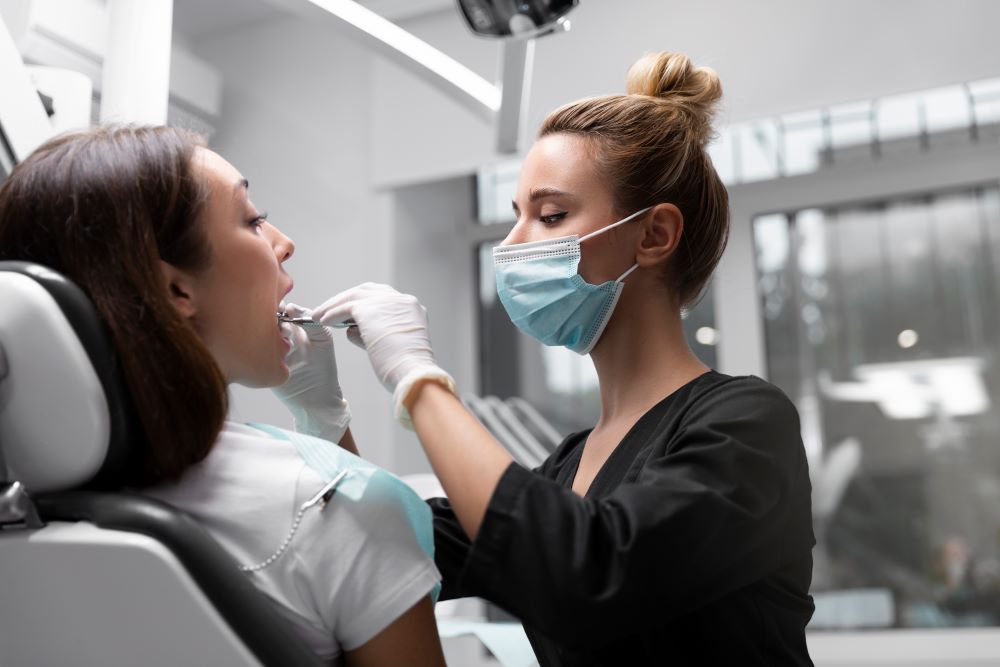
Periodontics in Welland focuses on the gums and other structures that support the teeth. Care includes periodontal assessment, measurement of pocket depths, digital imaging, non-surgical treatment such as scaling and root planing, and surgical periodontal therapy including gum graft and regenerative procedures when required.
Periodontics: Healthy Gums, Stronger Smiles
- Periodontics addresses gum disease and problems affecting the supporting tissues around the teeth.
- Assessment may include a gum examination, checks for recession or disease, periodontal pocket measurements and digital imaging.
- Non-surgical therapy includes deep cleaning, scaling and root planing below the gumline to remove plaque and tartar.
- Patient education on oral-hygiene practices helps support gum health and reduce future buildup.
- When non-surgical treatment is not sufficient, surgical periodontal care may include gum graft surgery and regenerative treatment for damaged gum and bone tissues.
- Aftercare instructions and support are part of the treatment and recovery process.
What Is Periodontics?
Periodontics is the area of dental care concerned with treating and managing diseases that affect the gums and the structures supporting the teeth. Gum disease can progress beyond visible inflammation and, when unchecked, may contribute to tooth loss and other serious oral-health problems.
Patients may search for a periodontist near me when they are dealing with gum disease, gum recession or deeper periodontal concerns. Welland Dental Centre provides periodontal care for these concerns; the provider term here reflects patient search language and is not presented as a credential claim.
Diagnosis and Assessment of Periodontal Conditions
Periodontal care begins with a detailed diagnosis and assessment designed to understand both visible gum changes and deeper supporting tissues.
- Thoroughly examine the gums.
- Look for signs of gum recession or periodontal disease.
- Evaluate the firmness and alignment of the teeth.
- Measure periodontal pocket depths.
- Use digital imaging when needed for a broader view of the supporting structures.
These findings form the basis of a personalized periodontal treatment plan rather than assuming every gum concern needs the same level of care. Routine monitoring may also connect with Dental Exams.
Non-Surgical Periodontal Therapy
Non-surgical periodontal therapy includes deep cleaning teeth, especially scaling and root planing, to clean below the gumline and remove plaque and tartar buildup.
- Scaling removes plaque and tartar from tooth and root surfaces, including areas below the gumline.
- Root planing treats the root surface as part of deeper periodontal care.
- The purpose is to reduce gum inflammation and help halt the progression of periodontal disease.
- Patients are educated about effective oral-hygiene practices that support gum health and help reduce future buildup.
For a detailed explanation of this procedure, see Scaling and Root Planing. Ongoing plaque control may also connect with Dental Hygiene Services.
Surgical Periodontal Therapy
When non-surgical methods are not sufficient, surgical periodontal therapy may be considered. Treatment can include gum graft surgery for gum recession and regenerative procedures intended to restore or regenerate damaged gum and bone tissues.
- Gum graft procedures may be used to address gum recession.
- Regenerative interventions may be used when damaged gum or bone tissues require surgical treatment.
- Treatment is performed with attention to precision, patient comfort and support for healing and recovery.
- Detailed aftercare instructions and follow-up support are provided after surgical treatment.
The appropriate surgical option depends on the periodontal problem identified during assessment. Surgery is not assumed for every patient with gum disease.
Why Periodontal Treatment Matters
Gum disease treatment is intended to address the health of the tissues that support the teeth, not simply the appearance of the gumline. As periodontal disease progresses, deeper pockets and buildup below the gums may require professional care.
- Treat plaque and tartar below the gumline when indicated.
- Reduce gum inflammation and help slow disease progression.
- Protect the supporting tissues around the teeth.
- Provide oral-hygiene guidance to support long-term gum health.
- Use surgical care when deeper tissue repair or regeneration is needed.
Healthy gums are a foundation for overall dental wellness. Periodontal care therefore combines diagnosis, active therapy, aftercare and ongoing maintenance.
FAQs About Periodontics
What is periodontics?
How is periodontal disease treated?
How can you tell if you have periodontitis?
Is periodontal disease treatable?
Can periodontal disease be reversed?
Get a Clearer Picture of Your Gum Health
Gum recession, inflammation, deeper periodontal pockets or a previous gum-disease concern can require more than routine cleaning. A periodontal assessment can determine whether non-surgical care, scaling and root planing or surgical periodontal therapy should be considered.
If you need periodontal care in Welland, Book an Appointment to receive a treatment plan based on the condition of your gums and supporting tissues.